I got hooked on miso ramen when my local Daiso started carrying vegan instant ramen kits, then suddenly stopped carrying them, leaving me high and dry without my ramen fix. I started searching for another recipe that could compare to the salty deliciousness of the packaged kits, and, after some trial and error, settled on this one.
To get the most accurate ramen possible, I searched for popular recipes on cookpad.jp, the Japanese equivalent of Allrecipes, and found one that looked promising. I then translated it (finally got to put my college language classes to use!) and monkeyed with the ingredient amounts until it tasted how I wanted. In particular, I had to substantially increase the miso amount -- I suspect that American miso is less potent than what was used by the author in Japan.
This has become one of my constant go-to recipes, since it's genuinely one of the easiest ways I know to make a tasty, homemade dinner in only ~20 minutes. It's a simple yet intoxicating flavor, and there's not really anything to dislike about it (well... unless you are watching your sodium intake).
Original Source: https://cookpad.com/recipe/7501930 (in Japanese) by Mikki's Cooking
Yield: 2 Servings (~3.25 cups / 770mL broth)
Ingredients:
- 2 bundles (~75g each) ramen or soumen noodles
- You could also use ~225g of fresh ramen noodles, but be careful as many fresh noodles contain egg
- Whatever toppings you prefer! (I recommend baked tofu or cooked fake chicken, and sliced veggies like green onions and carrots)
Broth:
- 1 tbsp minced garlic (~3 medium cloves)
- 3 tbsp white or red (preferred) miso
- I prefer red miso for this recipe if available because it has a more consistent strong and rich flavor. With white miso, some brands are less strong, so you will need to taste and add another tbsp or so if necessary.
- 2 tbsp soy sauce (shoyu)
- To make it interesting, you can use a 50/50 mix of Chinese soy sauce (Pearl River Bridge or Lee Kum Kee) and Japanese (Kikkoman), though using exclusively Japanese soy sauce should work fine.
- 2 tsp mirin
- 2 tsp sesame seeds (preferably toasted)
- 0.5 tsp toasted sesame oil
- 750 mL (3.25 cups) water
- 1.5 tsp (1/2 tbsp) fake chicken bouillon
- 1 tsp fake butter (e.g. Earth Balance) [this replaces beef tallow in the original recipe]
- 1 tsp doubanjiang paste (optional, gives a moderate spice level)
Modifications
To make this recipe gluten-free, use only tamari for the soy sauce, and choose gluten-free noodles (e.g. rice noodles). Also be sure to verify that your fake chicken broth of choice is gluten-free as I am told not all of them are.
Directions:
- First, we will make the broth. Preheat a pot over medium heat.
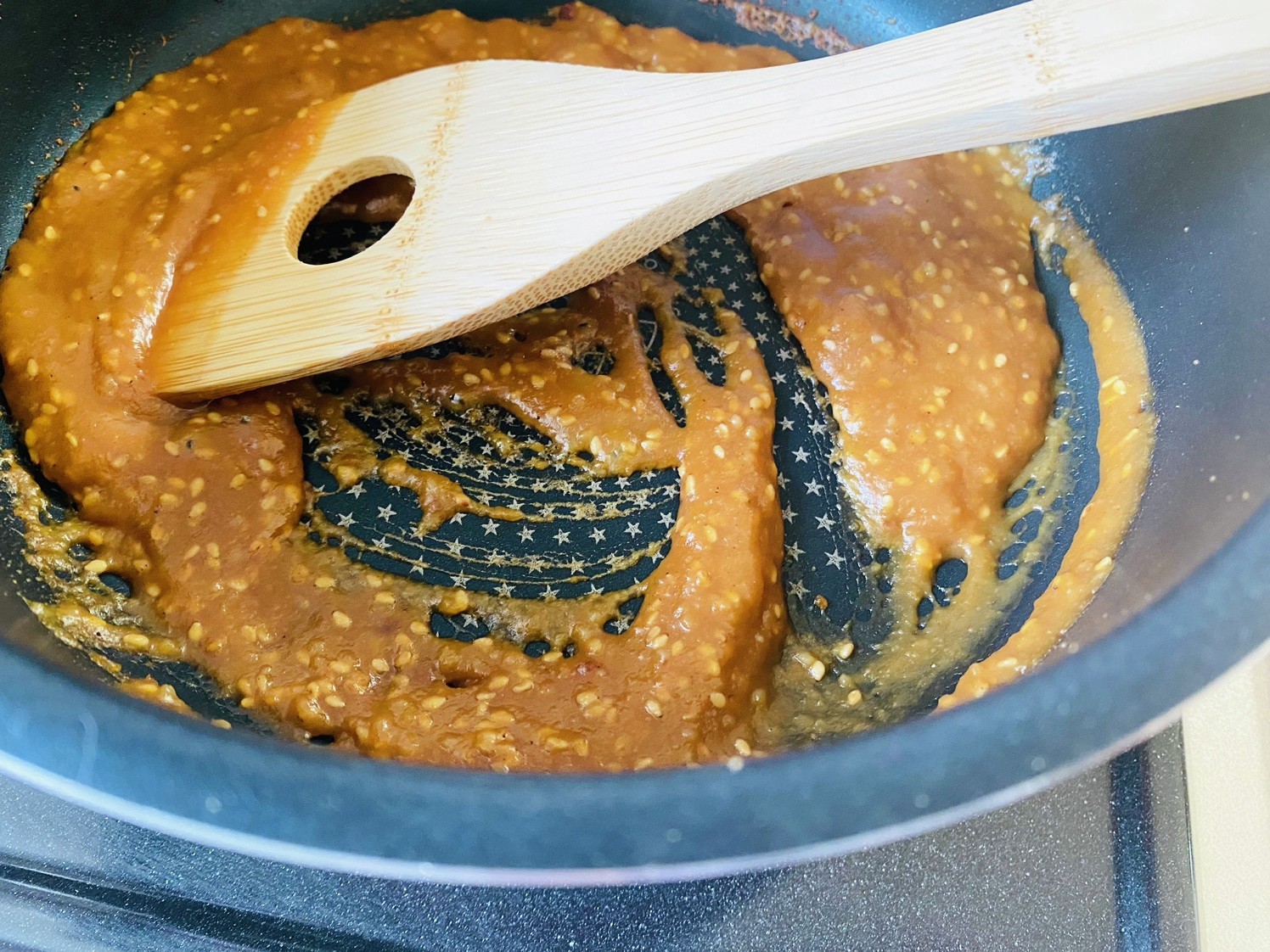
- Meanwhile, in a small bowl, mix together the minced garlic, miso, soy sauce, mirin, sesame seeds, and sesame oil with a fork until combined. It should resemble peanut butter.
- Once the pot is warmed, add the miso mixture. Fry for several minutes, until the mixture is bubbly and you can smell its flavor being released. Stir the mixture constantly using a spatula so it doesn't burn.
- Next, add the water and bring to a boil.
- Meanwhile, in a separate pot, boil up some water for cooking the noodles. Cook them according to package directions, then drain.
- Once boiling, mix in the fake chicken bouillon, fake butter, and doubanjiang paste if using.
- Once the miso broth is boiling, remove it from the heat immediately.
- Pour a generous 1.5 cups of broth into each bowl, then add in the noodles.
- Add preferred toppings and finishings! Shichimi powder [Japanese seven-flavor chili powder] is often a good choice to sprinkle on top. Chili oil (rayu) is also useful to get that restaurant-style oily appearance.

